


Rubber Seal Applications in Modern Industries
The use of rubber seal products across industrial, commercial, and household sectors continues to expand as operators focus on improving protection, insulation, and long-term reliability. These sealing components are found in automotive systems, home construction, refrigeration systems, marine assemblies, food equipment, and electronics housing. One point that often emerges in market observations is that a rubber seal is valued not only for its flexibility but also for its ability to form a tight interface between surfaces, preventing unwanted air, moisture, vibration, or dust from passing through.
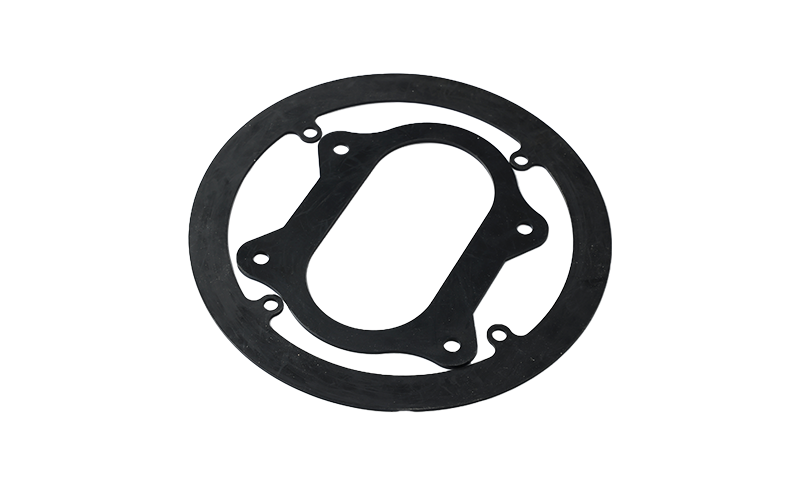
In the automotive sector, sealing components are used inside door frames, windshields, trunks, and engine compartments. Their flexibility helps absorb subtle body movement while keeping noise transmission low. Vehicles on long highways or uneven urban roads benefit when rubber seals help limit rattling and maintain cabin isolation. A deeper look at usage also shows that rubber seals are common in HVAC systems to reduce leakage and maintain thermal balance in ducts and vents. Small gaps in these lines may cause gradual energy waste, so use of sealing strips helps stabilize temperatures more effectively.
In refrigeration and food handling applications, sealing quality influences cooling efficiency. A well-matched rubber seal around a cooler door prevents warm air from entering. In commercial kitchen environments, this may support more consistent food conditions and avoid sudden temperature swings. Cold-chain delivery trucks also integrate sealing strips around panel doors to reduce variations. By retaining cool temperatures, rubber seals help protect stored products without requiring constant energy adjustments.
Construction uses form another major grouping. Weatherstripping materials made of rubber seal components line windows and doors to block drafts and reduce water infiltration. Home builders also install them along basement entries or storage doors to mitigate moisture exposure. Sealing strips applied around pipes or conduit lines help limit vibration during operation.
Marine installations rely on rubber sealing products because repeated contact with spray, waves, or mist can introduce corrosion. Seals around cabin windows, deck hatches, and instrument panels form barriers against water entry. Certain sealing compounds can handle prolonged bending motion while maintaining elasticity, which is important when boats ride through uneven waves. Maintenance teams often inspect these seals periodically due to prolonged UV exposure.
Electronics manufacturing applies rubber seals in enclosures and housings to block dust and particles. Small dust intrusion can affect heat dissipation and electrical pathways, so sealing rings and gaskets support longer service life for operating hardware. Devices stored outdoors, especially sensors and monitoring units, benefit from sealed housings that reduce moisture presence.
Some commonly referenced features that influence purchasing decisions include:
- Size and cross-section design
- Shore hardness and elasticity
- Resistance to oils, fuels, or chemicals
- UV and temperature tolerance
- Installation format (adhesive, groove, clip-in)
Different industries review these parameters based on their environment. For example, HVAC installations focus on maintaining consistent airflow control, while automotive engineers prioritize vibration damping and noise reduction. Meanwhile, cold-chain handlers often look at sealing performance under repeated opening and closing cycles.
Buyers evaluating sealing components often require additional information such as shape profile (round, flat, U-channel), compatibility with surfaces, and available customization. Offering small samples helps users assess compression fit and sealing uniformity before bulk ordering. Clear product descriptions, dimensional diagrams, and installation instructions help distributors answer inquiries efficiently.
With a practical role in controlling air movement, reducing vibration, and stabilizing temperature, rubber seal components support consistent performance in multiple fields and continue to interest users seeking sealing solutions suitable for industrial or commercial use.
Related Products
-
 View More
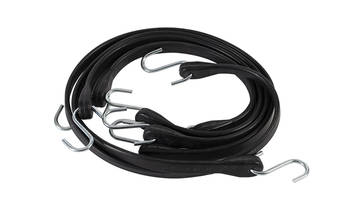
Industrial Flat Nature Tarp EPDM Rubber Strap with Hooks
-
 View More
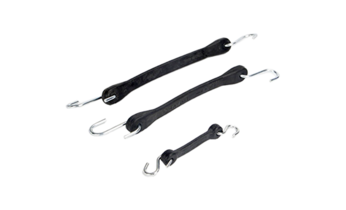
100% EPDM 9"/10"/15"/21"/31"/41" Rubber Tie Down Tarp Straps with S Hook
-
 View More
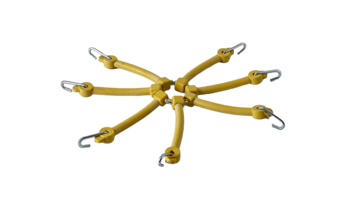
7-wire hook light truck tire chain dobby tensioner
-
 View More
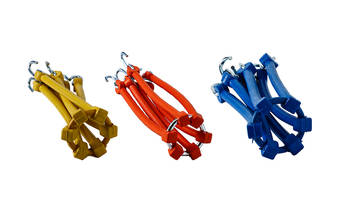
Blue multi- arm tighteners for light truck tire chain with 6 wire hook
-
 View More
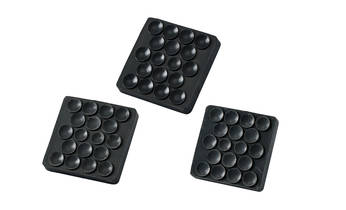
JB-21 Rubber Foot Pad, Cargo Bar Pad
-
 View More
Plastic/Rubber Bundled Cargo Stepping Board
 +86-13516769466
 +86-0576-87202376
 Waima Village, Yucheng Street, Yuhuan City, china.